Report on Farmers’ Day Celebration at SUM College of Teacher Education
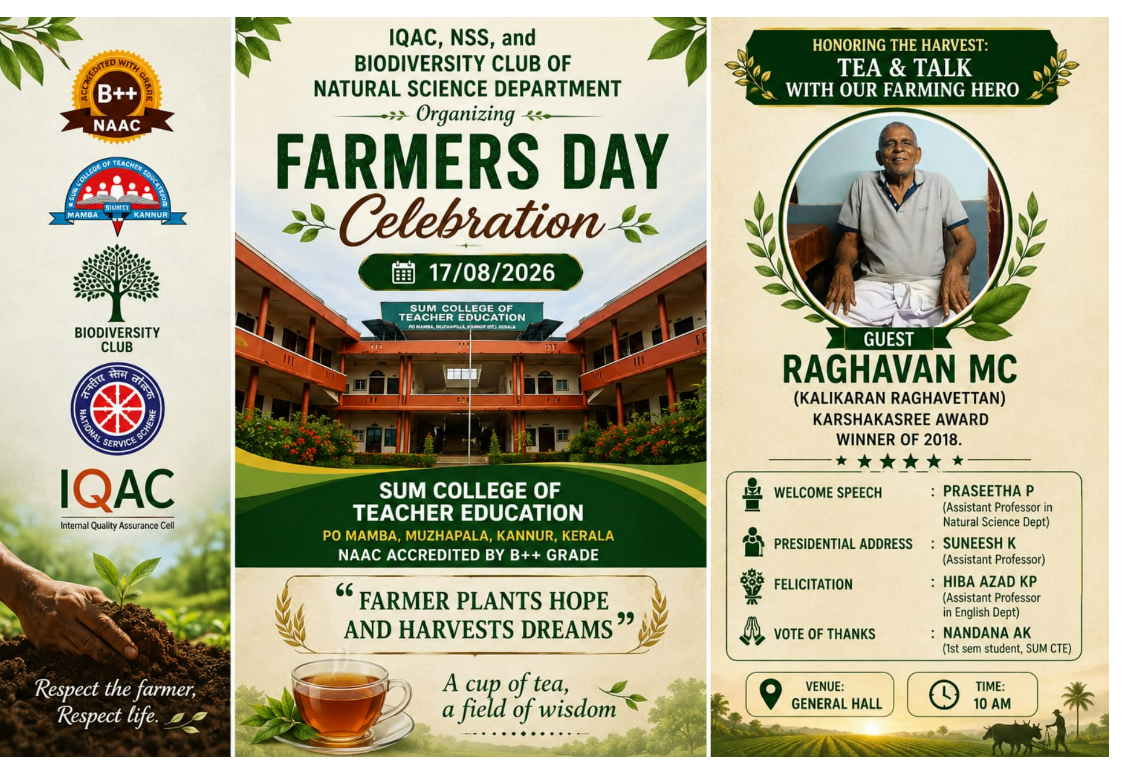
Date: 17 August 2026
Venue: General Hall, SUM College of Teacher Education (SUMCTE)
Programme: Farmers’ Day Celebration and Interaction with Farmers
Chief Guest: Mr. M. C. Raghavan, Renowned Farmer
Organized by: SUM College of Teacher Education
Introduction
Farmers’ Day was celebrated at SUM College of Teacher Education (SUMCTE) on 17 August 2026 at the General Hall. The programme was organized with the objective of creating awareness among student teachers about the significance of agriculture, the traditional knowledge of farmers, sustainable cultivation practices, the importance of indigenous seeds, and the challenges faced by the agricultural sector due to climate change.
The celebration was designed in the form of an informal and meaningful “tea talk” with a farmer, providing an opportunity for the participants to interact directly with an experienced agricultural practitioner. Rather than being a formal lecture, the session encouraged open conversation and knowledge sharing about the changing nature of agriculture and the experiences of farmers in the local community.
Welcome Address
The programme began with a welcome address by Mrs. Praseetha, Assistant Professor, Department of Natural Science, SUMCTE. She welcomed the chief guest, faculty members, and student teachers to the programme. She highlighted the importance of understanding agriculture not merely as an occupation but as an essential part of human life, food security, environmental sustainability, and rural development.
She also emphasized the value of learning directly from farmers, whose practical experiences and traditional knowledge contribute significantly to understanding agriculture.
Presidential Address
The session was chaired by Mr. Suneesh K., NSS Coordinator, SUMCTE. In his presidential address, he highlighted the relevance of Farmers’ Day and the important role played by farmers in sustaining society. He pointed out that the younger generation should develop greater awareness about agricultural practices, food production, environmental protection, and the challenges confronting farmers.
He also emphasized the need to encourage sustainable agricultural practices and to preserve traditional knowledge related to farming and cultivation.
Felicitation
Ms. Hiba Azad, Assistant Professor of English, SUMCTE, offered felicitations on the occasion. She appreciated the initiative of organizing an interactive session with a practising farmer and emphasized the importance of connecting educational institutions with local communities and their knowledge systems.
She noted that such programmes help student teachers gain practical awareness beyond the classroom and develop respect for the people who contribute directly to food production and environmental sustainability.
Interaction with the Chief Guest
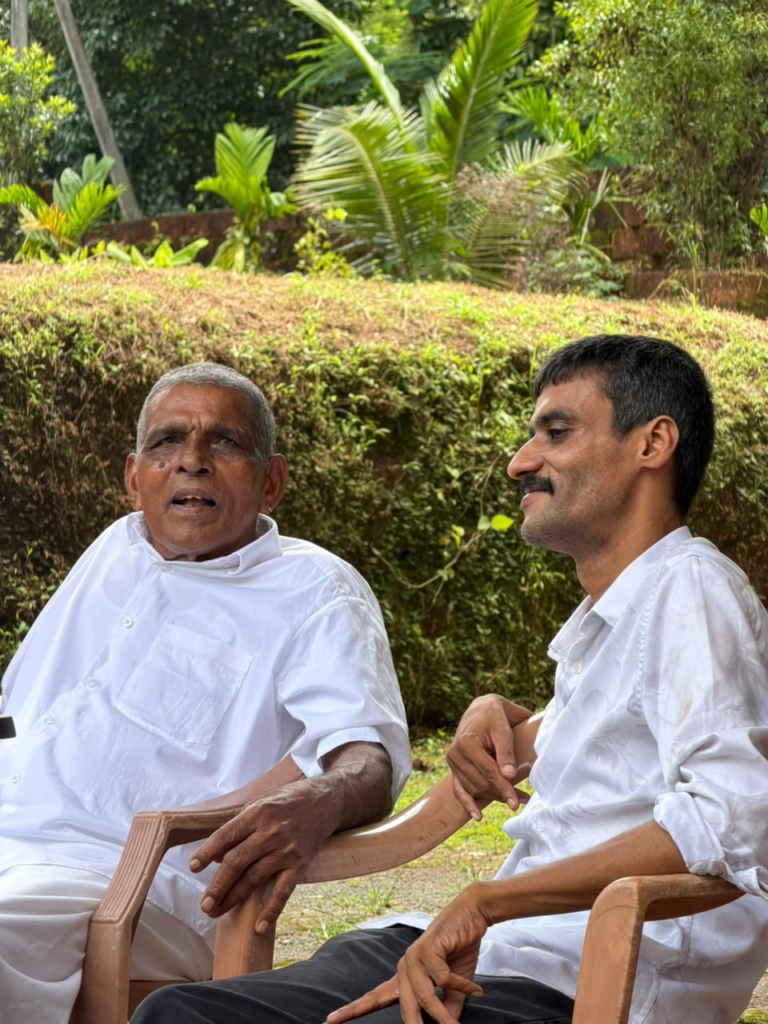
The major attraction of the programme was the detailed interaction with Mr. M. C. Raghavan, a well-known and experienced farmer. He shared his valuable experiences and practical knowledge accumulated through years of involvement in agriculture.
The interaction covered several important aspects of farming, including local agricultural practices, traditional knowledge, seeds, cultivation methods, changing climatic conditions, and the transformation of the agricultural sector.
Mr. Raghavan explained how farming practices have changed over the years and discussed the significance of selecting suitable seeds according to local environmental conditions. He shared his observations regarding traditional varieties of seeds and their importance in maintaining agricultural diversity.
He also spoke about different cultivation practices and the practical difficulties faced by farmers in maintaining agricultural productivity. His experiences provided the participants with an opportunity to understand agriculture from the perspective of someone directly engaged in the field.
Local Knowledge and Traditional Agricultural Practices
One of the important themes of the interaction was the local knowledge possessed by farmers. The discussion demonstrated that farmers have developed considerable practical knowledge through generations of experience and observation.
The chief guest explained how farmers traditionally observe soil conditions, rainfall patterns, seasonal changes, availability of water, and other environmental factors before deciding what and when to cultivate. Such knowledge, although often transmitted informally from one generation to another, remains highly valuable.
The discussion also emphasized the importance of preserving traditional agricultural knowledge while adopting suitable modern techniques. The combination of traditional wisdom and scientific knowledge can contribute to more sustainable and resilient agricultural practices.
Seeds and Cultivation
Another significant area of discussion was the importance of seeds in agriculture. Mr. Raghavan shared his experiences regarding the selection, preservation, and cultivation of different varieties of seeds.
The participants learned that the quality and suitability of seeds have a direct influence on cultivation and agricultural productivity. The discussion also created awareness about the value of preserving local and traditional seed varieties and maintaining agricultural biodiversity.
The conversation encouraged student teachers to recognize the importance of seed conservation and to develop an interest in agricultural activities at the community level.
Climate Change and Agriculture
A considerable part of the discussion focused on the impact of climate change on agriculture. Mr. Raghavan shared his observations about changes in weather patterns and their influence on farming.
Changes in rainfall, temperature, seasonal patterns, and other environmental conditions can create difficulties for farmers in planning cultivation. Such changes can affect the timing of sowing, growth of crops, availability of water, and overall agricultural productivity.
The discussion helped participants understand that climate change is not merely an environmental issue but also a serious concern for food production and the livelihood of farming communities. The need for climate-resilient and sustainable agricultural practices was therefore highlighted.
The Tea Talk
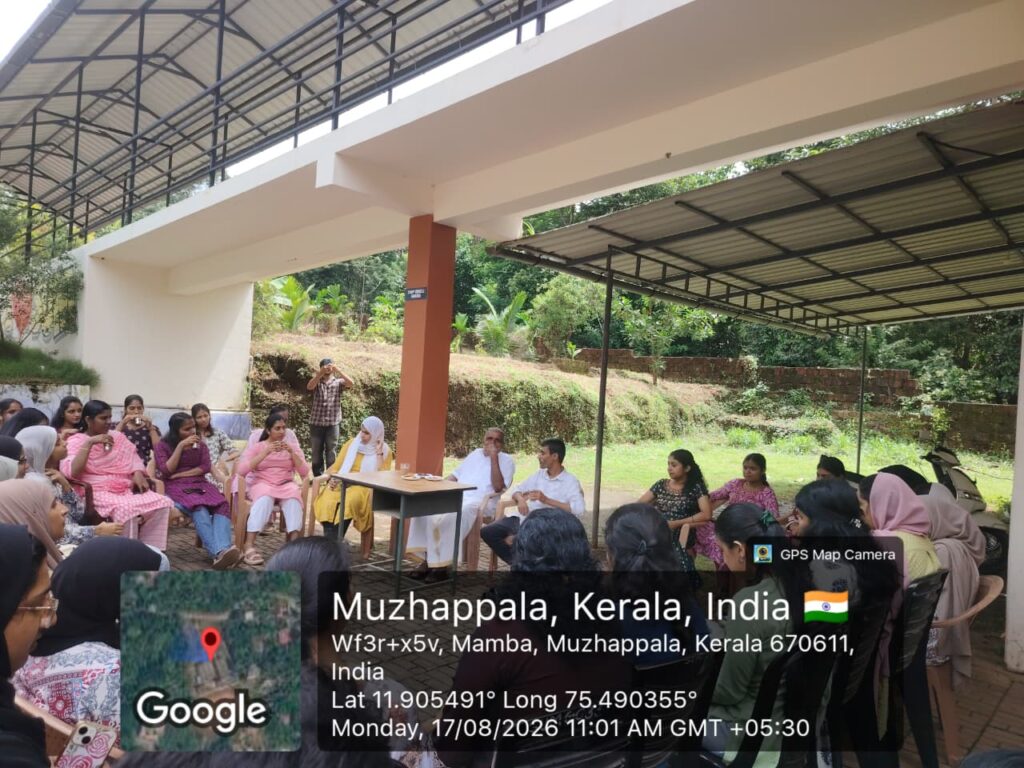
The programme was conducted in a relaxed and informal tea-talk format, which made the interaction lively and engaging. Instead of following a conventional lecture-based approach, the session provided space for conversation, questions, personal experiences, and sharing of ideas.
This informal setting enabled the student teachers to interact with the chief guest more freely. The session became an effective platform for exchanging practical knowledge and understanding the realities of farming.
The tea talk also demonstrated that valuable educational experiences can take place through direct interaction with members of the local community. The practical experiences shared by the farmer complemented the theoretical knowledge acquired by student teachers through their academic studies.
Educational Significance
The Farmers’ Day celebration was particularly relevant for student teachers because it encouraged them to look at agriculture from educational, environmental, social, and economic perspectives. The programme helped them understand the importance of experiential learning and community-based knowledge.
The session also encouraged participants to think about how agricultural awareness can be incorporated into educational activities. As future teachers, they can play an important role in developing environmental awareness, promoting sustainable living, and encouraging students to respect farmers and agricultural practices.
Conclusion
The Farmers’ Day Celebration held at SUMCTE on 17 August 2026 was a meaningful and informative programme. The interaction with Mr. M. C. Raghavan provided valuable insights into agriculture, local knowledge, seeds, cultivation practices, and the challenges created by climate change.
The informal tea-talk format made the programme interactive and engaging, allowing participants to learn directly from the practical experiences of an experienced farmer. The programme successfully created greater awareness among student teachers about the importance of agriculture and the need to preserve traditional knowledge while responding effectively to changing environmental conditions.
Overall, the celebration served as a valuable platform for knowledge sharing, community interaction, environmental awareness, and appreciation of the vital role of farmers in society. It was an enriching experience for all the participants and contributed meaningfully to the educational objectives of SUMCTE.